How to Tell if a Vacation Rental Direct-Booking Site Is Legitimate
A practical checklist for travelers: what to check before booking directly with a vacation-rental owner or manager, from contact info to payment safety.
Related reading
Fall Foliage Vacation Rentals: 5 Direct-Booking Destinations for Shoulder Season
Five fall-foliage and shoulder-season destinations worth booking directly with the owner, plus what changes about the search once summer crowds thin out.
Direct-Booking Vacation Rentals: 5 Great Summer Picks
Five vacation-rental destinations worth booking directly with the owner this summer, plus how to spot a real direct-booking page.
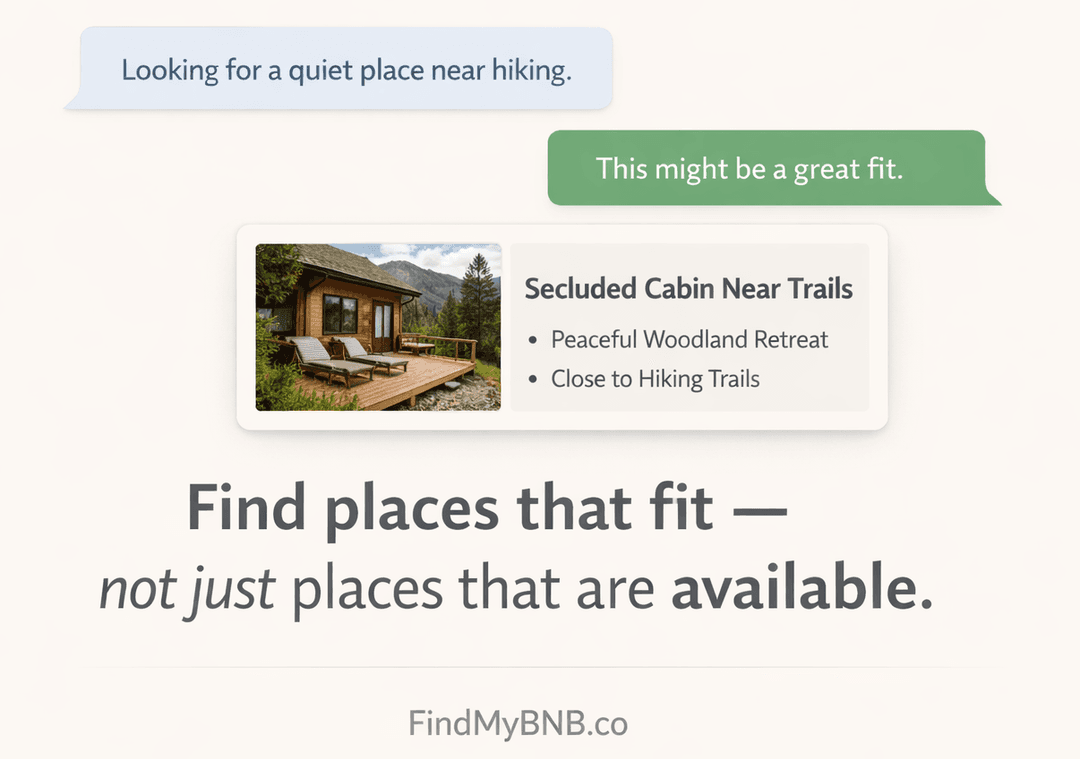
Once you find an owner or manager's own booking page for a vacation rental, the discount can be real -- but so can the risk if the page turns out to be fake or outdated. Most direct-booking sites are exactly what they look like: a small operator's own website, a personal booking form, or a page built through a property-management tool. A few are not. Here is what to check before you send a deposit anywhere that is not a big marketplace.
Look for a real name attached to the property
A legitimate direct-booking page usually names an actual person or company somewhere -- an owner's first name, a small management company, a "meet your host" section. If a site only ever refers to "the property" or "management" with no name anywhere, that is worth a second look. It does not have to be elaborate; a single line like "Managed by the Hendricks family since 2014" tells you more than a polished page with no name at all.
Check for contact info beyond a bare form
A phone number or an email address that isn't a generic "info@" catch-all is a good sign. Try it before you book: send a quick question about the property and see whether a real person answers in a reasonable amount of time, in a way that shows they actually know the place. A site that only offers a contact form with no other way to reach anyone should make you slow down, especially if you can't find the owner or company anywhere else online.
Cross-check the photos and details against what you've already seen
If you found the direct site after seeing the same property on a marketplace listing, compare them. The address, layout, amenities, and photos should line up -- not word for word, but recognizably the same place. A direct page that describes a completely different unit, or that reuses generic stock photos instead of real interior shots, is a reason to ask more questions before you commit.
Pay in a way you can trace and dispute
A credit card or a payment processor that offers buyer protection is safer than a wire transfer, a gift card, or a request to pay a stranger through a peer-to-peer app with no purchase protection. Most legitimate owners and managers use a normal card payment or invoicing tool for exactly this reason -- it protects them too, since a chargeback trail cuts both ways. If a site pushes hard for an untraceable payment method and won't offer any alternative, that is one of the clearer red flags.
Read the cancellation and deposit terms before you commit
Direct bookings do not come with a marketplace's built-in cancellation policy, so the terms are whatever the owner or manager writes down -- which means you actually need to read them. A clear, specific policy (even a strict one) is a normal part of doing business directly. Vague terms, no written confirmation at all, or pressure to skip the details and "just send the deposit" are the things to watch for.
Quick checklist before you book direct
- A real name -- owner or management company -- attached to the property, not just "management."
- Contact info beyond a form, and a real reply when you test it with a question.
- Photos and details that match what you've seen elsewhere for the same property.
- A traceable payment method with dispute protection, not a wire transfer or gift card.
- Written cancellation and deposit terms you can actually read before you pay.
FindMyBNB is a directory that points travelers to official owner and manager booking pages instead of only marketplace listings -- we don't handle the booking, payment, or calendar ourselves, so these checks are still yours to make on whatever page you land on. If you're an owner or manager with a direct-booking page of your own, you can add or claim your listing so travelers searching for your destination can find it.